Non-profit organization · The information you need now, the freedom of your next step
SightSpace lowers the everyday mobility barriers blind people face, with AI glasses.
Catching a bus, finding a door. Using the first-person view of AI glasses, we confirm whether the entrance, sign or bus in front of you matches where you are going.

What we do
And three things go together.

01
We check doors and buses
In the last few metres where map apps stop, it confirms in Korean whether the entrance, sign or bus in front of you matches your destination. When it is not sure, it holds and looks again.

02
We work on AI glasses
We use AI glasses already on the market as they are, and build the language model that runs on top of them. Glasses leave both hands free. You can use them while holding a white cane, or while tracing a wall.

03
We teach people to use them
Even a good tool ends up in a drawer with nowhere to learn it. So we run hands-on classes with the glasses themselves.
Why we do this
Map apps get you to the building. Finding the door starts there.
- Map apps handle where to go; the white cane handles how to walk safely.
- In between, the last few metres where map apps stop are left empty. Is this door the place I was looking for? Is the bus pulling in the one I need?
- Today that check is made by asking whoever is nearby. SightSpace builds AI glasses that take on that moment.
Confirm · Align · Hand off
We take on the last few metres, where map apps stop.
Map apps handle where to go; the white cane handles how to walk safely. SightSpace works in between, doing three things.
01 · Confirm
Confirm
Check whether what is in front of you — a stop, an entrance, a sign — matches your destination.
02 · Align
Align
If it does, turn you toward that door or that bus.
03 · Hand off
Hand off
Notice when the AI is not sure or a person's help is needed, and connect you to a place or a person who can help.
When it isn't sure, it holds and looks again rather than saying something wrong. It does not replace map apps or the white cane; it covers the gap between them.
Co-design
Why our first tasks are doors and buses
Sido, a blind creator (@hello_sido_), continuously contributes feature feedback and co-creates content with us, and about 10 other blind people cooperate in development. We have conducted more than 60 interviews to date.
Accessibility research staff at the National Museum of Modern and Contemporary Art, Korea told us that blind visitors need both a way to get to the museum and guidance within indoor spaces.
So our first tasks are doors and buses — detecting and guiding the moments of leaving where you are, travelling, and entering your destination.
- Interviews to date
- 60+
- Blind people cooperating in development
- ~10
Awards & selections
Recognised along the way.
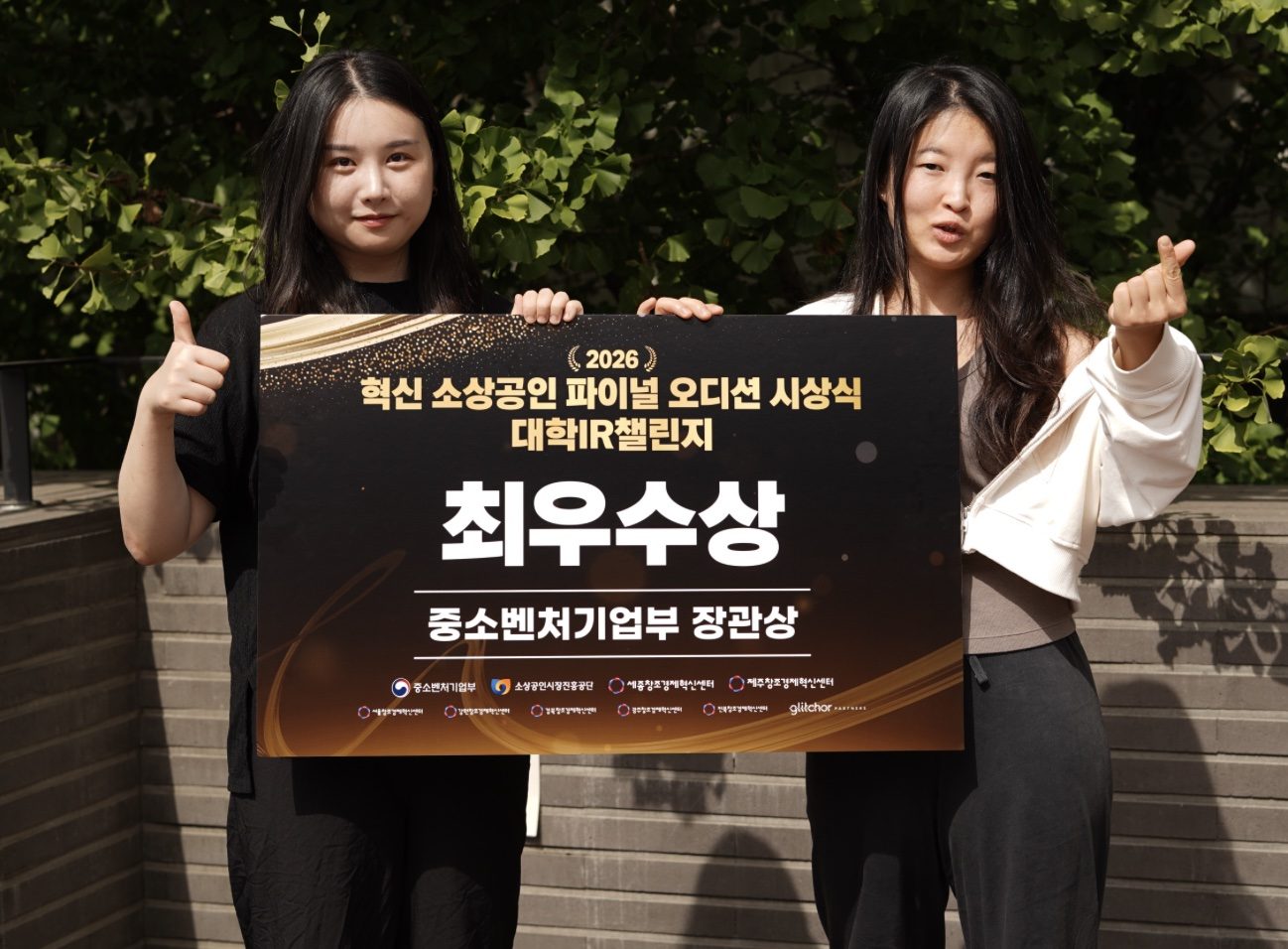
Top Award, University IR Challenge — 2026 Innovative Small Business Final Audition
Minister of SMEs and Startups Award · Sep 10, 2026
Selected, 2026 Challenge Track — Asan Nonprofit Startup
Asan Nanum Foundation
Selected, CES 2027 Eureka Park
Changwon National University pavilion
Top Award, Hongik Startup Festival 2026
Startup Idea category
Selected, U300+ Promising Student Startup Teams
Top 40, Student Startup Festa
First-round finalist, AI ROOKIE 2026
National AI Competition
Exhibitor, AI FESTA 2026
Oct 6–8, COEX Seoul
Individual award
Feasibility Award, APEC Sustainable Social Entrepreneurship Training 2026
Co-founder Jinseorang Madison Chung · Aug 25–27, 2026, Seoul
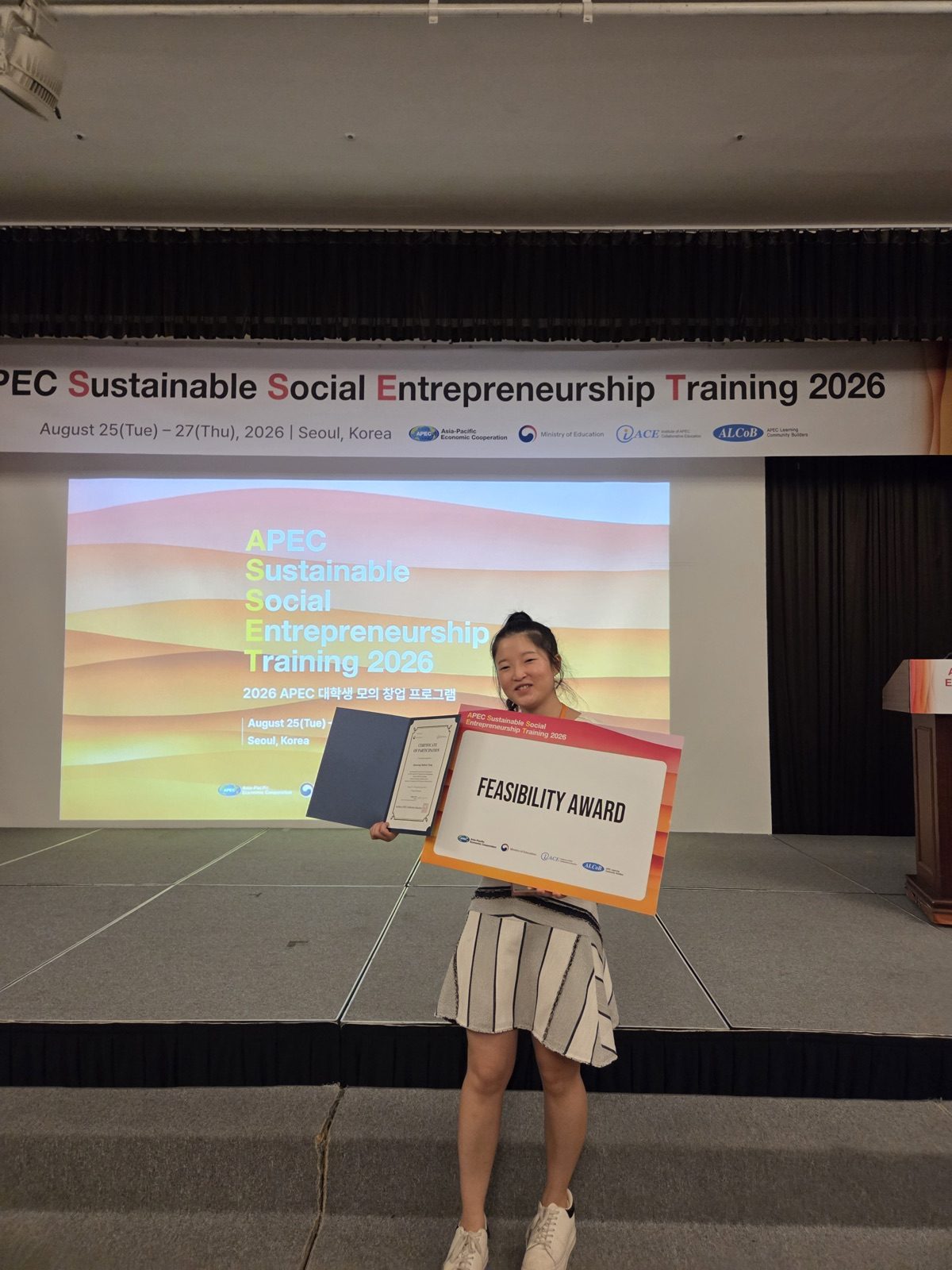
Jinseorang Madison Chung, Feasibility Award 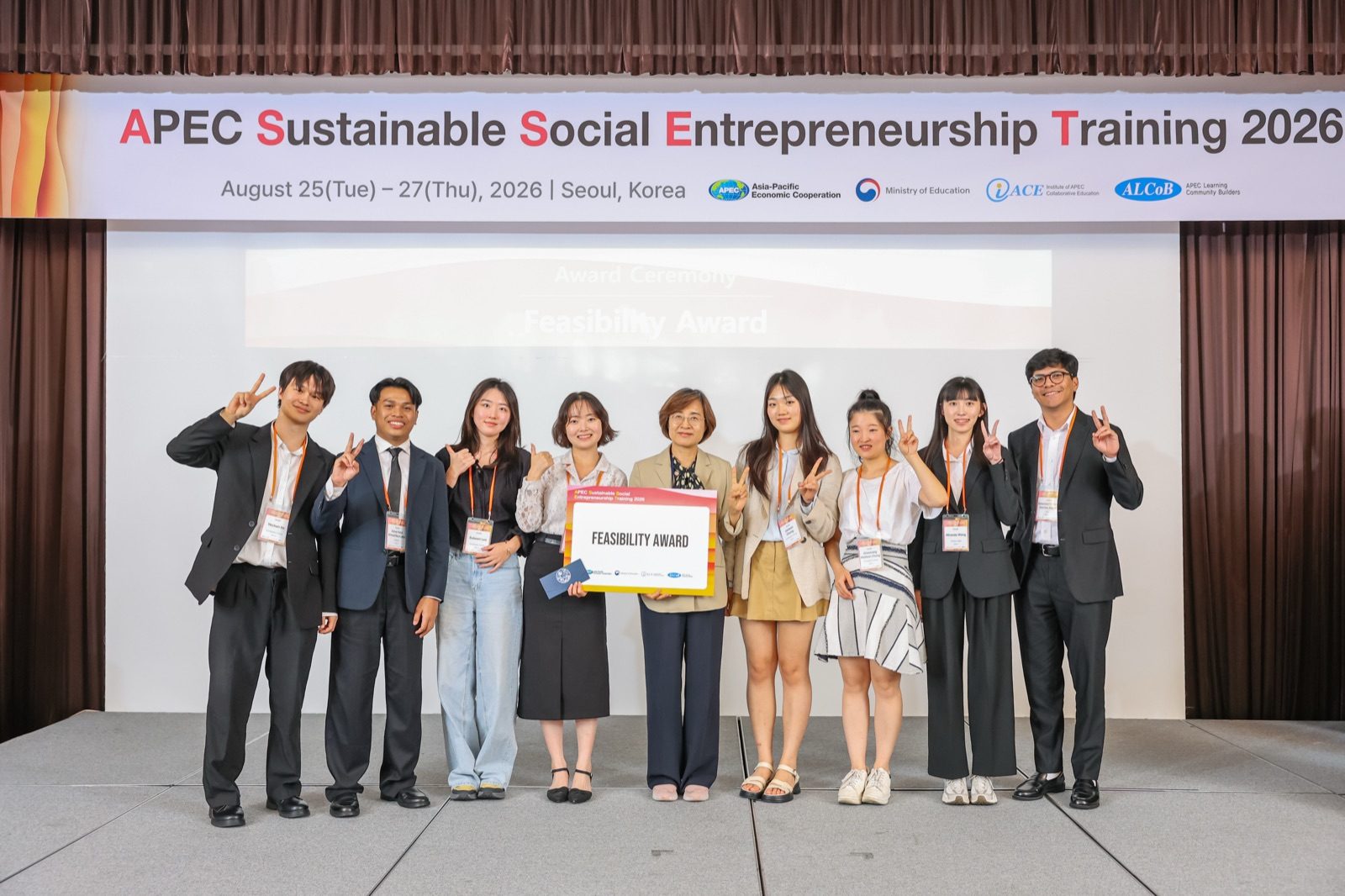
On stage at the award ceremony, with the team 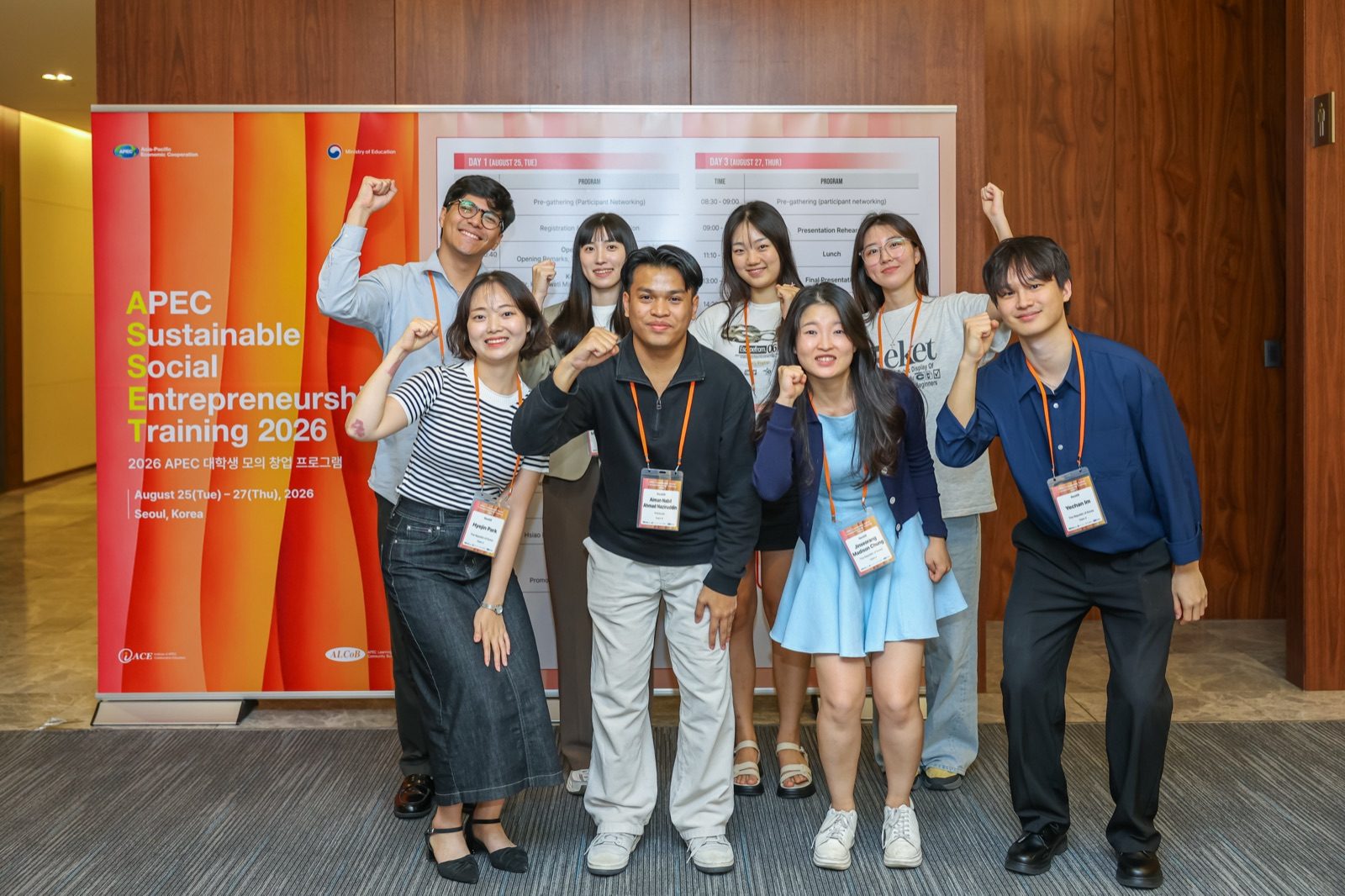
Three days as one team with students from across the region 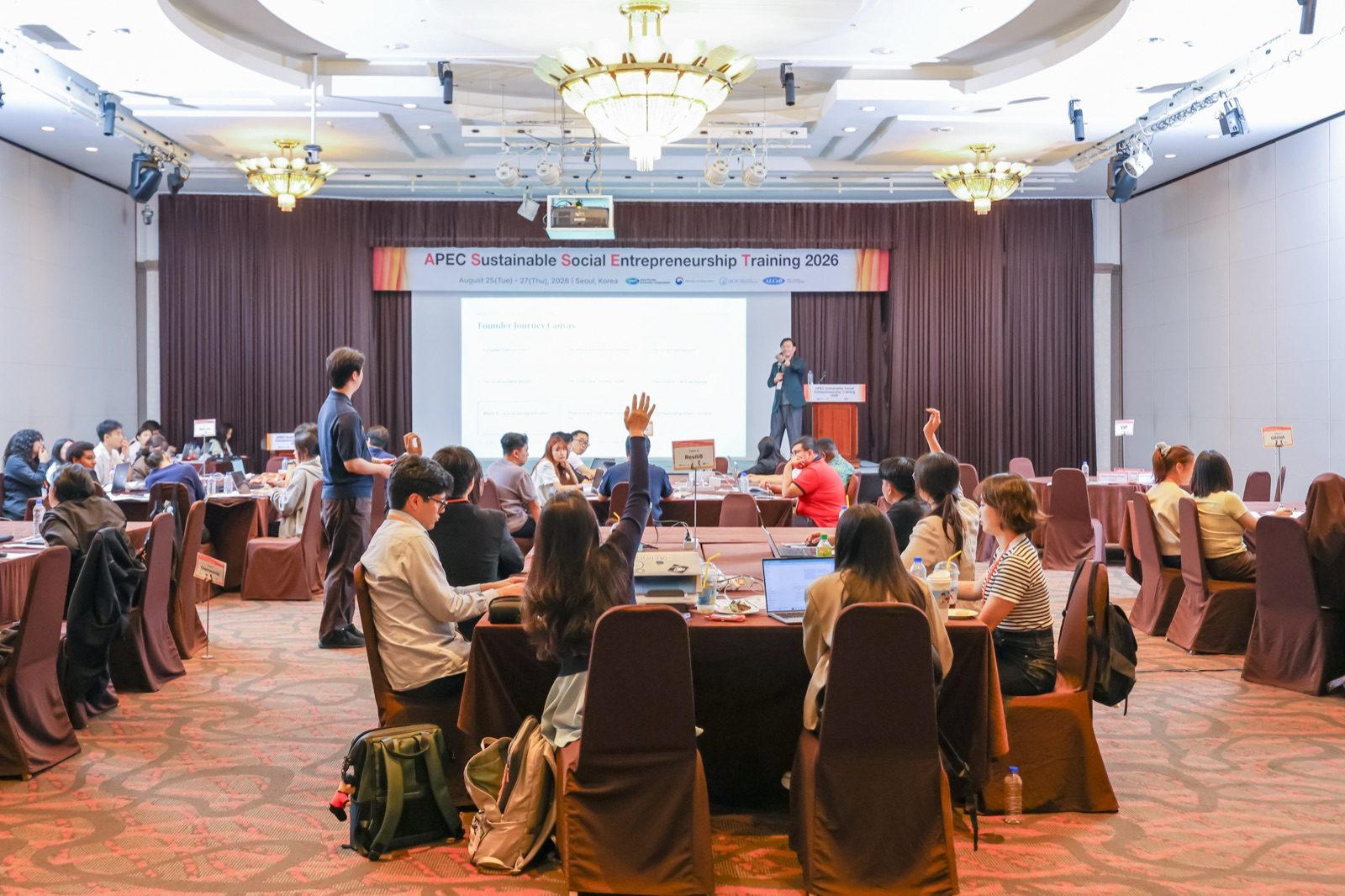
APEC Sustainable Social Entrepreneurship Training 2026 workshop
Values
Our story

It began by noticing
After planning and running several exhibitions and pop-ups ourselves, we realised, far too late, that there was no place for a blind visitor in the guided tours, the product information, or the exhibit labels. Our idea of barrier-free had stopped at braille on the entrance and the restroom.

Before the museum, the way to the museum
We started by building guidance inside exhibition halls. But what we heard from blind people and museum staff was that getting there, and finding the door once inside, came first. So we turned toward the guidance everyday movement truly needs.

We carry the cost of building it
Accessibility is usually added last, because it takes more time and more money. We know how to build services with artificial intelligence. We decided to carry that cost ourselves.

We start with doors and buses
Leaving where you are, travelling, and entering your destination. Moments that repeat every day, yet each time mean asking someone. That is where we start.

The same scene, said differently to each person
Someone blind from birth and someone who lost their sight later need different information. We do not merely adjust the tone; the choice of what to say is matched to the person from the start.

The goal is independence, not assistance
This is not about adding more people to help from the side. It is about building the conditions in which someone can move without help at all.
How we build it
Most AI looks at a single photograph and describes it. We remember the space.
- 01
We read space, not scenes
It is closer to drawing a map of the space than to turning a photograph into prose.
- 02
The path you walked stays
Come back to the same space a second time, and it does not behave as if it were the first.
- 03
The same fact, differently for each person
The same fact can be information to one person and noise to another.
- 04
It learns when not to speak
In a 300-second clip, 601 moments could have been spoken. Fourteen were.
Research collaboration
With Rokid, we measure whether guidance arrives in time.
Hongik University UROP industry–academia project (Fall 2026): Spatial Information Guidance with Wearable AI Devices — Delivery-Timing Analysis and a Measurement Model for On-device VLM Pipelines
Rokid joins the project as partner institution (participation confirmed Sep 11, 2026). SightSpace co-founder Jinseorang Madison Chung leads the three-channel protocol and guidance-data analysis.
The project measures, across motion, field of view and guidance, how soon and whether within a valid window AI-glasses guidance mentions a spatial element after it appears — building a measurement protocol and analysis tools. It also examines whether key spatial events survive when fewer frames are processed.
- 95.6%
- Frames that never led to speech
- 84%
- Share of the 581 ms recognition stage taken by depth estimation
Preliminary measurements from 7 videos and one wearer. Existing footage on this site was not recorded on Rokid devices.
What we have done
We build it by checking on site.
Major course at Hongik University, College of Architecture
We teach a regular credited course on barrier-free design and AI glasses for architecture students.
Museum pilot
We ran a pilot on site at a museum, working with a professional audio describer for blind visitors.
AI glasses class at Gajeong Girls' Middle School
Accessibility for the people who will design spaces, and tools for the people who will use them.
International events and field testing
Participation in the World Citizens Forum, AI glasses demonstrations for diplomats, and a Feasibility Award at the APEC social entrepreneurship program.
What matters most is not the technology, but what the people who will use it have to say.
Try the AI glasses yourself and tell us where catching a bus or finding a door gets hard. One hour and twenty minutes, with an honorarium of KRW 50,000.